
Think about walking into a local dental practice. And you sense there is an unusual calm about the place. The admin desk is clear of the usual frantic paperwork. The assistants are focused entirely on patient comfort. Behind the scenes, a sleek unit quietly organises instruments with precision. At the same time, a digital interface gives the dentist real-time diagnostic insights that feel more like a second opinion from a colleague than a data readout. This isn’t a scene from a distant sci-fi film. It’s a glimpse into the modern workspace. The “new hire” in this office isn’t exactly a person, but it isn’t a cold or isolated machine either.
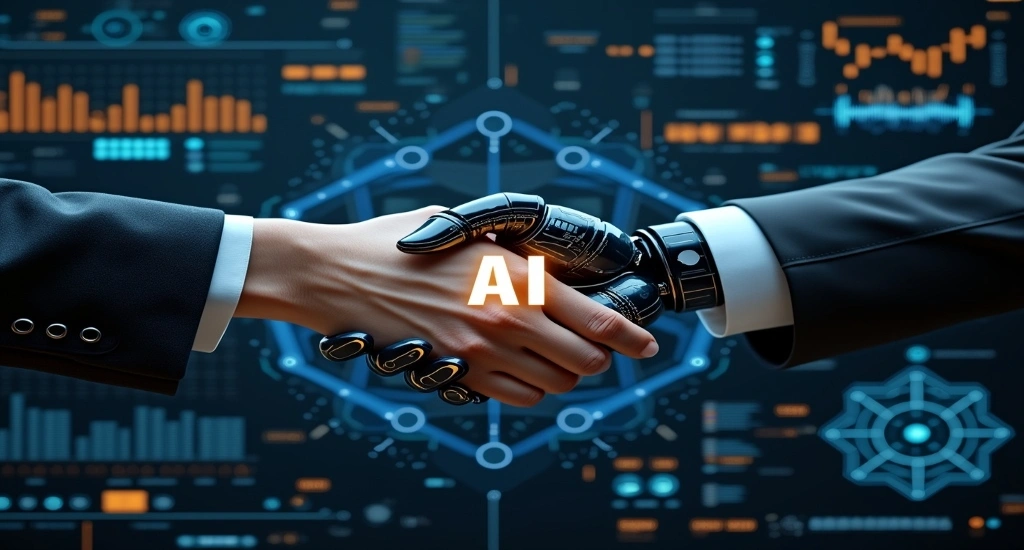
We are currently witnessing a profound shift in how we perceive technology. We are moving away from the era of simple automation toward a sophisticated duality. On one hand, we have AI robots providing the physical hands needed to navigate the material world. On the other hand, we have the emergence of human AI, the collaborative brain that acts as an intellectual partner. The conversation is no longer about a binary battle of “Robots vs. Humans.” Instead, it is about how physical automation and digital intelligence are merging to create a more capable, resilient, and creative workforce.
Physical AI: Beyond the Factory Cage
For decades, the term robotics conjured images of massive orange arms bolted to factory floors, repeating the same weld or bolt-turn thousands of times a day. These machines were fast but fundamentally “blind” and “dumb.” They lived in cages for safety because they couldn’t adapt to a human walking by. Today, that paradigm has shattered. The field of AI robots has quietly transformed, influenced by what companies like NVIDIA now refer to as “Physical AI.”
This new generation of AI robots doesn’t just follow a script or rigid predefined rules. Thanks to new breakthroughs in AI robots technology, these machines can now perceive, reason, and act within dynamic environments. When we discuss AI robots, we are talking about systems that use “foundation models” similar to those that power chatbots, but translated into physical movement. AI robots can now tell that a cardboard box is fragile, and that if someone steps into their path, they should slow down rather than just trigger an error.
The real-world value of these advanced AI robots is immense, particularly for businesses struggling with the “three Ds” of labour: tasks that are dull, dirty, or dangerous. When AI robots take over heavy lifting in warehouses or repetitive sorting in logistics, something important changes for human workers. They are no longer tied to physically demanding roles, but instead step into supervisory positions, managing teams of AI robots and concentrating on strategy, coordination, and problem-solving. The machine does the lifting, but the human provides the insight.
The Rise of Human AI
While we witness the physical side of automation evolve, a more subtle transformation is happening in our digital workspaces. This is the rise of human AI. To be clear, human ai isn’t about creating robots that look like people or have “feelings.” Rather, it refers to artificial intelligence designed to interact, reason, and collaborate like a professional peer. It is the transition from AI as a search engine to AI as a teammate.
Microsoft’s latest research into the “new future of work” highlights a shift toward “collective productivity.” In this model, human ai serves as a thought partner. It handles the exhausting data crunching and first-draft generation, while the human professional provides the “taste,” the ethical compass, and the overarching strategy. This form of human AI allows a small team to operate with the analytical power of a global corporation.
We are moving from simple tools to genuine teammates. Modern human AI agents can now “chain” complex tasks together. You might ask your human ai assistant to research a market trend, summarise the findings, and draft a project proposal based on those insights. This reduces the need for constant micromanagement. The beauty of human AI lies in its ability to adapt to your specific “voice” and business logic, making the collaboration feel seamless and intuitive.
Collaboration in Action: The Modern Workspace
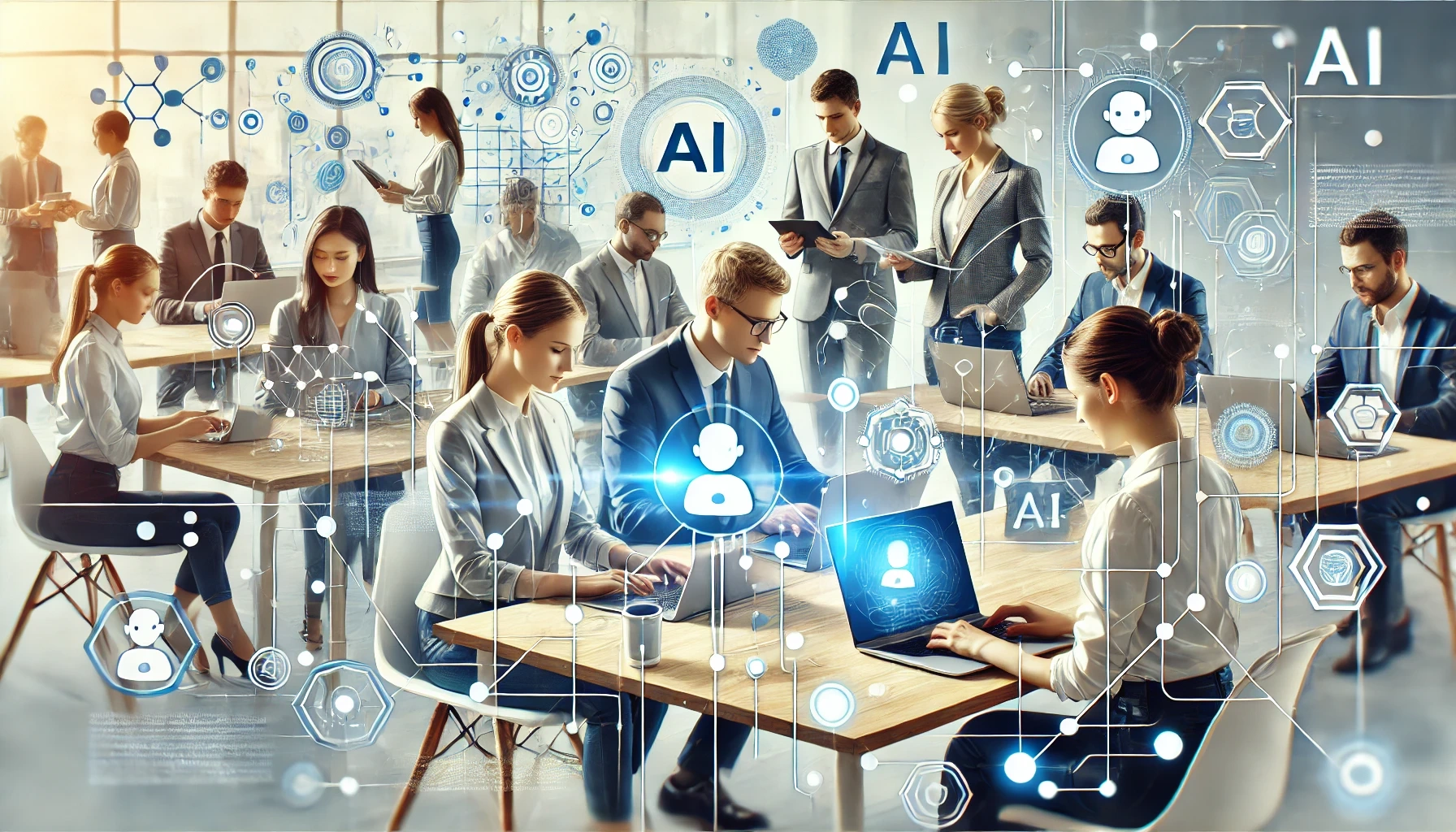
In the most successful modern businesses, these two forces don’t operate in silos. They work in a hybrid model. A retail business might use an ai robots system to manage its inventory and logistics in the backroom, ensuring that shelves are never empty. Simultaneously, that same business uses human AI to analyse customer feedback and optimise the supply chain in real time.
The debate between “augmentation” and “automation” is often misunderstood. Some fear that technology will simply “offload” human work until there is nothing left for us to do. However, findings from organisations like Anthropic suggest the opposite. High-performing teams are using human AI to “iterate.” They don’t just give a command and walk away. They engage in a back-and-forth dialogue with the AI to refine ideas.
This iterative process leads to results that neither the human nor the machine could achieve alone. When AI robots handle the physical repetition and human AI manages the information density, the human worker is free to focus on innovation. This is the ultimate synergy: the machine provides the scale, and the human provides the soul.
A Practical Roadmap for the Forward-Thinking Business
If you are looking at your own operations and wondering where to begin, the key is to avoid “shiny object syndrome.” Do not invest in AI robots or sophisticated human AI systems just because they are trendy. Instead, look for your bottlenecks. Where is your team most frustrated? Where are the errors occurring?
Focus on return on investment by identifying the specific friction points in your workflow. Often, the biggest hurdle to adopting AI robots or human AI isn’t the financial cost but the culture. It requires a commitment to “reskilling” your staff. Your employees need to transition from being “doers” to being “orchestrators.” They need to learn how to prompt human AI effectively and how to manage the output of AI robots.
The good news is that we are in the era of democratised technology. You no longer need a massive research and development budget to benefit from these advancements. Many human ai tools are available as simple subscriptions, and low-code platforms allow you to build custom automations without an engineering degree. Starting small allows you to build confidence and see where the technology adds the most value before scaling up.
Conclusion: A Human-Centric Future
Looking ahead to 2026 and the years that follow, the narrative of technology is becoming more optimistic. AI robots are giving us our time and physical health back by taking on the burdens of manual labour. Meanwhile, human AI is helping us use that reclaimed time more creatively and effectively.
The most successful organisations will be those that do not view these tools as replacements for human talent. They’ll see these tools as ways to amplify what people can already do. When AI robots handle the physical work and human AI supports thinking and judgement, technology starts working for people, not against them. This shift isn’t coming someday. It’s already happening, and it’s pushing us to work smarter, not just harder.
Work isn’t just about machines taking over. AI robots handle the precise tasks, human AI helps with the thinking, and people get to focus on what really matters. Small workshop or growing firm, integrating these “new hires” is how you stay ahead.
AI robots are slipping into daily life almost unnoticed, much like smartphones once did. In hotels, they help with room service. On farms, they track crops with amazing accuracy. Pair them with human AI, and you get a business system that can adapt and thrive no matter the challenge.
Every time we interact with human AI, we are training our own ability to think more clearly and communicate more effectively. The feedback loop provided by human AI forces us to sharpen our own ideas. In this sense, human ai is not just a tool for productivity; it is a tool for personal and professional growth. The partnership between a person and their human AI assistant is becoming one of the most important relationships in the modern economy.
At the end of the day, using AI robots and human AI should make the world feel more human, not less. By letting AI robots handle the mundane and human AI handle the complex, we are left with what we do best: building relationships, exercising empathy, and dreaming up the next big idea. We’re only at the start of this more automated, collaborative future, and there’s still plenty left to figure out.
The investment in AI robots today is an investment in the safety and longevity of the workforce. By reducing the physical toll on workers through AI robots, businesses can retain their most experienced staff for longer, moving them into mentorship roles aided by human aid. This holistic approach ensures that knowledge is preserved while efficiency is increased.
This shift towards AI robots and human AI takes time. It isn’t something you rush. Take the time to understand the nuances of how ai robots can fit into your physical space and how human ai can enhance your digital workflows. The synergy between ai robots, human ai, and human ingenuity is the blueprint for the next industrial era.
Pay attention to how AI robots and human AI are evolving, and you stay ahead of the curve.Those who learn how to balance machines and thinking will shape what comes next, with AI robots doing the building and human AI guiding the understanding.